Introduction
Gemstones have always been nature’s sparkling wonders — symbols of love, wealth, and healing energy. Whether it’s a Blue Sapphire ring, a Moonstone pendant, or an Emerald band, every gemstone tells a unique story.
But as jewelry technology advances, a big question arises:
👉 Should you buy lab-created gemstones or natural ones?
At USA Lover 925, we craft both types of gemstone jewelry in 925 Sterling Silver, ensuring timeless beauty and authenticity. In this guide, we’ll explore the truth behind lab-created vs natural gemstones, their pros, cons, and how to choose the right one for your collection.
Buy Best Gemstone & Silver Jewelry Visit Here : www.usalover925.com
1. Understanding the Basics
What Are Natural Gemstones?
Natural gemstones are formed deep inside the Earth over millions of years through natural geological processes. They are mined from the earth, cut, and polished to enhance their brilliance.
Examples: Emerald, Sapphire, Ruby, Topaz, Amethyst, Citrine, Opal, and Garnet.
Each natural gemstone carries unique inclusions — tiny imperfections that make them one-of-a-kind.
What Are Lab-Created Gemstones?
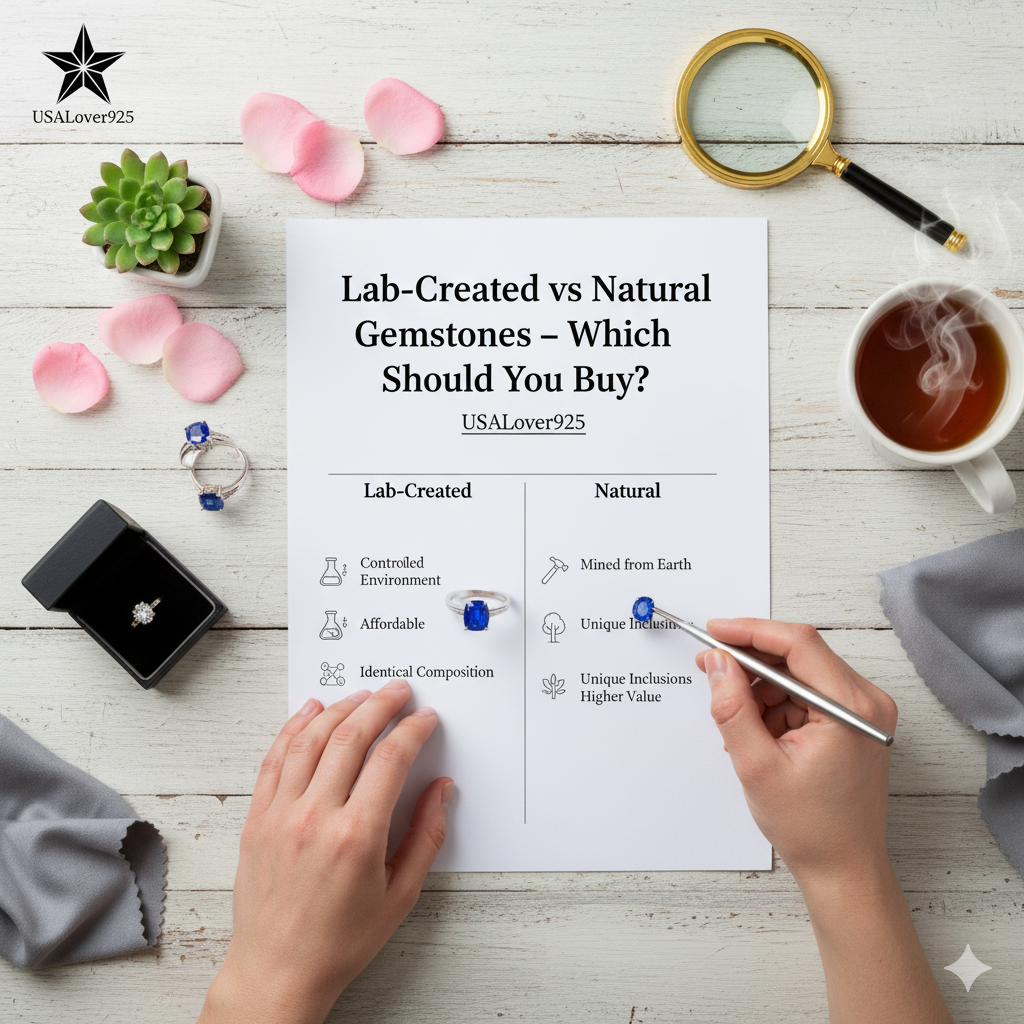
Lab-created gemstones (also called synthetic or cultured stones) are grown in laboratories under controlled conditions that mimic natural processes. They have the same chemical, optical, and physical properties as natural gemstones.
Example: Lab-created Sapphire has the same hardness, brilliance, and color as a mined Sapphire — but it’s more affordable and eco-friendly.
2. How Lab-Created Gemstones Are Made
Lab-created gems are not fake — they’re scientifically grown. Two major methods are used:
a. Flame Fusion Method
Mineral components are melted using a high-temperature flame, and crystals form as they cool. Common for Ruby, Spinel, and Sapphire.
b. Hydrothermal Method
Crystals grow in a high-pressure, high-temperature solution — just like in nature. This process is often used for Emerald, Quartz, and Beryl.
💎 Result: A gemstone identical to a natural one in structure, brilliance, and durability.
3. Differences Between Lab-Created and Natural Gemstones
| Feature | Natural Gemstones | Lab-Created Gemstones |
|---|---|---|
| Origin | Formed in the Earth naturally | Created in a laboratory |
| Composition | 100% natural minerals | Same chemical structure |
| Inclusions | Unique natural flaws | Fewer or no inclusions |
| Price | More expensive | 40–80% cheaper |
| Environmental Impact | Requires mining | Eco-friendly |
| Availability | Limited by nature | Readily available |
| Ethics | May involve mining concerns | Conflict-free and ethical |
4. Are Lab-Created Gemstones Real?
Absolutely yes.
They’re not “imitation stones” like glass or plastic. Instead, they are scientifically identical to their natural counterparts — in every measurable way except origin.
Example: A lab-created Ruby is still a Ruby. It has the same hardness (9 on the Mohs scale), color, and brilliance.
5. Benefits of Choosing Lab-Created Gemstones
1. Affordable Luxury
You get the same sparkle and beauty at a fraction of the price — perfect for budget-conscious buyers.
2. Eco-Friendly Choice
Lab-grown gems avoid destructive mining practices, making them a sustainable and green alternative.
3. Ethical Sourcing
No risk of “conflict stones” — every piece is responsibly made.
4. Customization Possibilities
Lab-created stones can be tailored for size, shape, and color precision, making them ideal for personalized jewelry.
6. Why Some People Still Prefer Natural Gemstones
While lab-created gems are impressive, many jewelry lovers cherish natural stones for their emotional and historical value.
Rarity & Prestige: Owning a natural gem means possessing a piece of the Earth’s ancient story.
Investment Value: High-quality natural gems can appreciate over time.
Spiritual Beliefs: Some believe that only natural stones carry cosmic energy and healing vibrations.
7. Gemstone Examples: Lab vs Natural
💙 Blue Sapphire
Natural: Deep royal blue, mined mainly in Sri Lanka and Kashmir.
Lab-Created: Identical brilliance and hardness, at 70% lower price.
💚 Emerald
Natural: Often includes inclusions (called jardin).
Lab-Created: Flawless clarity and vibrant color.
❤️ Ruby
Natural: Priceless red hue but rare.
Lab-Created: Excellent fire and sparkle without high cost.
💜 Amethyst
Natural: Found in Brazil and Africa, easily available.
Lab-Created: Visually identical and sustainable.
8. How to Identify Real vs Fake Gemstones
Here’s how you can check:
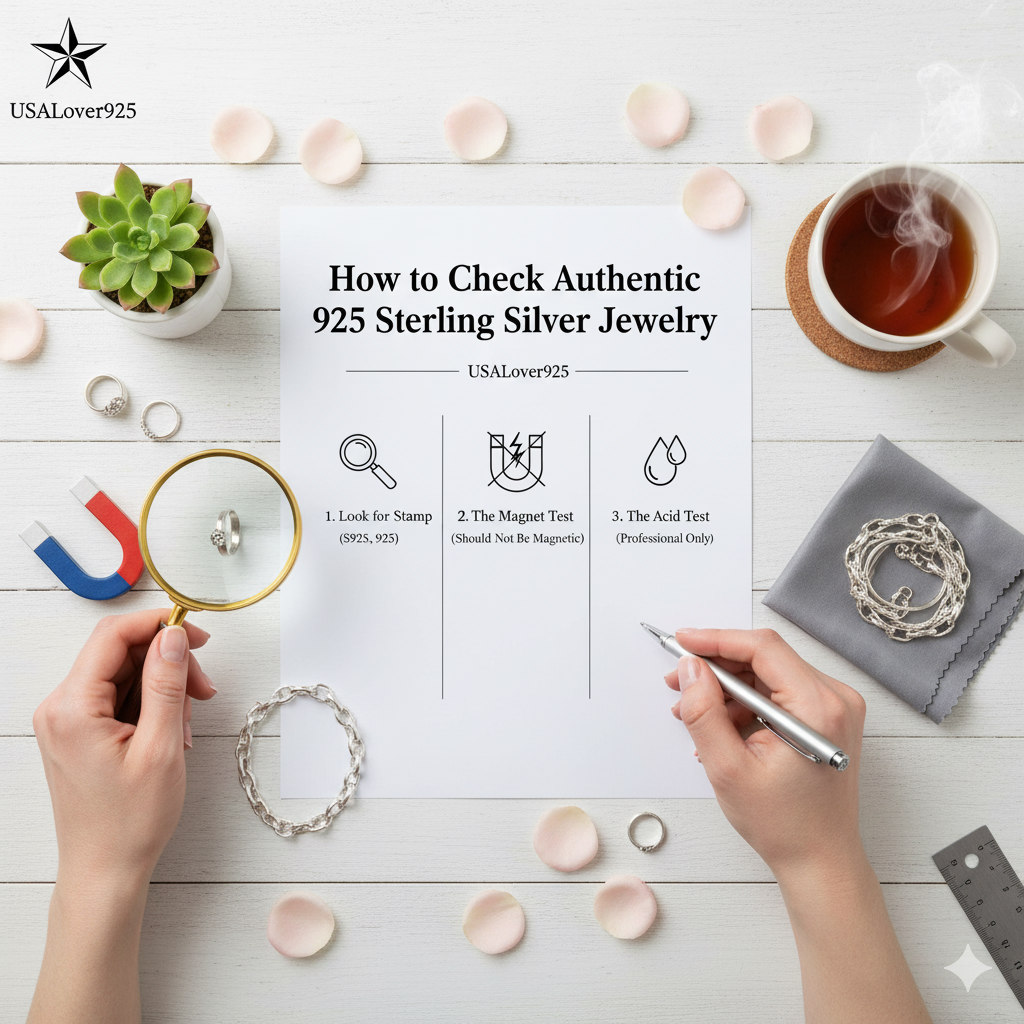
Look for Hallmarks: Genuine silver jewelry should be marked as “925” or “Sterling Silver.”
Ask for Certification: Reputable sellers like USA Lover 925 provide gemstone authenticity assurance.
Check Inclusions: Natural stones often have unique patterns under magnification.
Weight Test: Natural gems are slightly heavier than synthetic ones.
Consult Experts: A gemologist can verify using advanced testing tools.
9. Which Gemstone Should You Buy?
If you’re unsure, consider your purpose and budget:
| Purpose | Best Option |
|---|---|
| Everyday wear | Lab-created (durable, affordable) |
| Heirloom or collector’s piece | Natural gemstone |
| Ethical/sustainable choice | Lab-created |
| Spiritual or astrological use | Natural gemstone |
💍 Example: A lab-created Sapphire engagement ring offers beauty and sustainability — while a natural Emerald pendant carries timeless allure.
10. USA Lover 925 – Your Trusted Source for Silver & Gemstone Jewelry
At USA Lover 925, we bring you a handpicked selection of both lab-created and natural gemstone jewelry in authentic 925 Sterling Silver.
Our Best-Selling Collections:
💎 Blue Topaz & Sapphire Rings – Classic elegance
💚 Emerald Engagement Rings – Regal & timeless
🖤 Black Onyx Bands – Bold & mysterious
💜 Amethyst Solitaires – Spiritual charm
🔵 Turquoise Pendants – Bohemian vibes
Each piece is handcrafted with care, combining traditional artistry with modern design — ideal for anniversaries, birthdays, or self-love moments.
11. How to Care for Your Gemstone Jewelry
Avoid Chemicals: Keep away from perfumes, lotions, and harsh cleaners.
Store Safely: Use separate boxes or pouches to prevent scratches.
Clean Gently: Use a mild soap solution and a soft brush.
Polish Regularly: Silver jewelry may tarnish — use a silver polishing cloth to restore shine.
For detailed care, read our post: Winter Jewelry Care Tips: Protect Your Silver from Tarnish
12. Common Myths About Lab-Created Gemstones
| Myth | Fact |
|---|---|
| Lab gemstones are fake | They are real, just grown in labs |
| They don’t last long | Equally durable as natural stones |
| They don’t have value | They hold emotional and design value |
| Only natural stones are beautiful | Both can be stunningly identical |
13. FAQ – Lab-Created vs Natural Gemstones
Q1: Are lab-created gemstones cheaper than natural ones?
✅ Yes, usually 40–80% less expensive while maintaining identical beauty and durability.
Q2: Can lab gemstones be used for engagement rings?
Absolutely! Many couples prefer them for ethical and sustainable reasons.
Q3: Do lab-created gems have healing energy?
Some believe the energy is linked to the structure, not origin — meaning both can have similar effects.
Q4: How can I verify gemstone authenticity?
Buy from trusted sellers like USA Lover 925, which provides guaranteed 925 silver and verified gemstones.
14. Final Thoughts
When it comes to Lab-Created vs Natural Gemstones, there’s no wrong choice — only the one that fits your values and lifestyle.
Choose lab-created gemstones for affordability, ethical sourcing, and flawless beauty.
Choose natural gemstones for rarity, tradition, and spiritual connection.
Either way, you’re celebrating timeless artistry and nature’s brilliance.
✨ Explore the latest gemstone rings, pendants, and bands at www.usalover925.com — crafted with love, passion, and 925 Sterling Silver purity.
💎Jewelry On Usalover925
- Eternity Band Ring
- Solitaire Ring
- Signet Ring
- Men’s Gemstone Ring
- Unisex Band
- Pendant / Necklace
- Women Ring
- Unisex Ring
Follow On Social Media