From Rough Stone to Ring: Inside the Jewelry-Making Journey
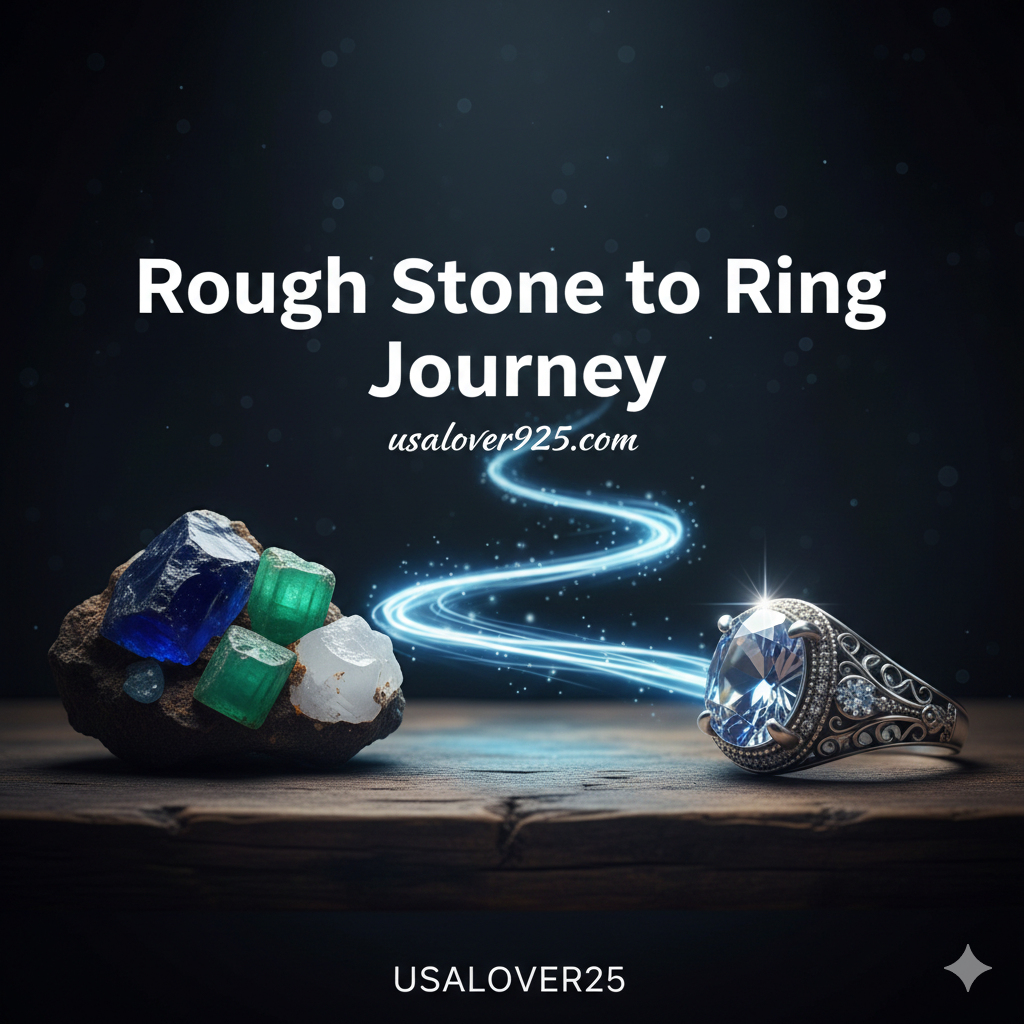
A rough stone’s journey to become a sparkling solitaire ring captivates with its transformation from earth’s raw treasure to elegant jewelry. The rough stone to ring process blends geology, artistry, and precision engineering—turning rugged crystals into heirloom pieces at usalover925.com.
This 2600-word guide reveals every stage of the rough stone to ring journey: mining, cutting, polishing, setting, and final assembly. Whether you’re admiring our eternity ring bands or men’s gemstone rings, each piece carries this remarkable story. Let’s trace the gem’s path from mountain to finger!
Why the Rough Stone to Ring Journey Matters
Only 1% of rough gem material survives cutting—20% yield for sapphire, 40% for emerald. This waste underscores skilled lapidaries’ value, transforming potential into precision. At usalover925.com, we source ethically-mined rough, ensuring your women’s rings carry positive energy.
Key Benefits:
-
Maximum beauty extraction through expert planning
-
Ethical traceability from mine to market
-
Custom proportions matching stone’s character
Follow our Instagram process reels to see transformations live.
Stage 1: Rough Stone Sourcing and Selection
Rough stone to ring begins underground. Miners extract crystals from pegmatites (emerald), alluvial deposits (sapphire), or kimberlite pipes (diamond).
Selection Criteria:
-
Color Zoning: Uniform hue preferred; chatoyancy (cat’s eye) valued
-
Inclusions: Acceptable clarity varies—emerald loves jardin, diamond hates feathers
-
Shape Potential: Proportions for target jewelry (round brilliant for solitaires)
-
Yield Estimate: 30-50% finished weight projection
Our pendant/necklace collection features rare rough cuts preserving natural textures.
| Gem Type | Rough Source | Typical Yield | Usalover925 Featured |
|---|---|---|---|
| Sapphire | Alluvial gravel | 25-35% | Solitaire Ring |
| Emerald | Hydrothermal veins | 35-45% | Women Ring |
| Ruby | Marble host rock | 20-30% | Eternity Ring Band |
Stage 2: Planning and Marking the Rough
Master cutters study rough under 10x loupes, mapping facet placement around inclusions. CAD software simulates light performance before first cut.
Critical Decisions:
-
Cutting Style: Brilliant (diamond), step (emerald), mixed (fancy sapphire)
-
Table Proportion: 50-60% width for maximum sparkle
-
Major Directions: Align with crystal optic axis (sapphire doubling prevention)
For signet rings, cabochons preserve rough asterism. Time: 1-3 hours planning per stone.
Stage 3: Preforming – From Rough to Outline
Dop wax secures rough to metal stick. Diamond saws remove waste matrix, creating basic shape (bruting for rounds). Ultrasonic saws ensure precision ±0.1mm.
Techniques:
-
Trim Sawing: Remove dead weight
-
Faceting Machine Preform: Computer-controlled grinding wheels
-
Hand Grinding: Traditional lapidary wheels for custom shapes
Yield drops 50% here. Watch our YouTube cutting demos.
Stage 4: Faceting – Birth of Brilliance
Rough stone to ring magic happens during faceting. Gem rotates between grinding wheels (80-1200 grit diamond), creating 57-58 facets for round brilliants.
Facet Sequence:
1. Table (top center) - 34% width

2. Star facets (8) - sparkle foundation

3. Main crown (8 bezel) - light entry

4. Upper girdle (16) - transition

5. Lower girdle (16) - light return

6. Pavilion mains (8) - fire creation

7. Culet (point) - prevents chipping
Polish wheels (cerium oxide) achieve mirror finish. Sapphire takes 8-12 hours; quartz 2-4 hours.
| Facet Stage | Wheel Grit | Purpose | Time per Stone |
|---|---|---|---|
| Grinding | 100-600 | Shape definition | 4-8 hours |
| Pre-polish | 1200 | Smooth transition | 1-2 hours |
| Final Polish | 3000+ | Mirror brilliance | 30-60 min |
Stage 5: Proportions and Symmetry Check
Digital scan verifies angles: crown 34°, pavilion 40.8° ideal for diamond. Hearts & Arrows scope reveals light symmetry for premium stones.
Quality Grades:
-
Triple Excellent: Ideal light return
-
Very Good: Minor symmetry variance
-
Commercial: Fashion jewelry proportions
Our unisex bands feature AGS-certified ideals.
Stage 6: Metal Preparation for Setting
While gems finish, jewelers craft mountings:
For Solitaire Ring:
-
14K white/yellow gold prong basket
-
4-6 claws sized to stone table
-
Shank tapering for finger grace
For Eternity Ring Band:
-
Channel walls precisely spaced
-
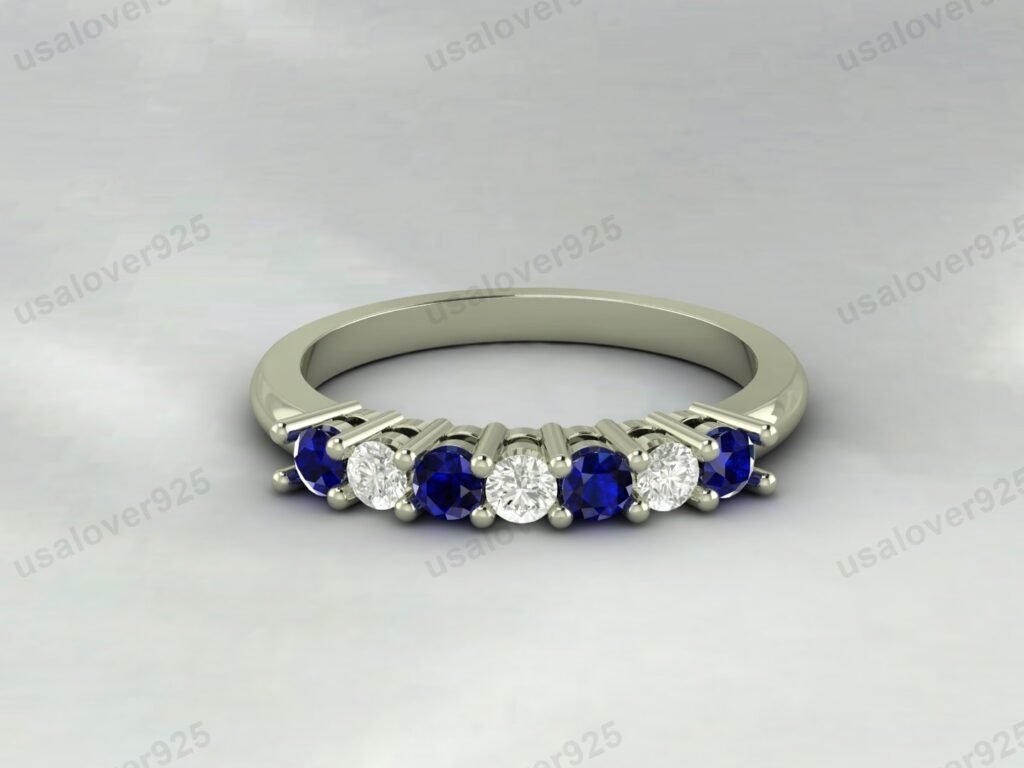
Pavé pin settings for shared prongs
For Men’s Gemstone Ring:
-
Bezel cups protecting large facets
-
Heavy shank proportions
Stage 7: Gem Setting – Union of Stone and Metal
Master setters secure gems without marring:
Prong Setting (Solitaires):
-
Position stone in seat
-
Burnish prongs with setting punch
-
Tighten with heart burr if loose
Bezel Setting (Cabochons):
-
Seat stone flush
-
Stake walls inward 0.1mm increments
-
Bright cut top edge
Pavé Setting (Eternity Bands):
-
Drill micro-holes
-
Mini-prongs grab girdles
-
Mini-beads disguise metal
Setting comprises 40% of rough stone to ring value.
Stage 8: Pre-Final Inspection and Adjustments
10x loupe reveals:
-
Prong tightness (rock test)
-
Symmetry alignment
-
Polish scratches
-
Metalwork balance
Minor laser corrections for diamonds; hand refinishing for color gems.
Stage 9: Final Polishing and Plating
Brilliant Finish Steps:
-
Pre-polish: Tripoli compound removes setting marks
-
High polish: White rouge wheel creates mirror
-
Rhodium plate: 0.5-2 microns anti-tarnish (white gold)
Color gems skip rhodium to preserve warmth.
Stage 10: Quality Control and Certification
Triple Check Protocol:
-
Master Gemologist: Optics and proportions
-
Setters: Mechanical security
-
Goldsmith: Finish and hallmarks
Certifications:
-
GIA/AGS for diamonds
-
AGL for colored stones
-
14K/18K stamps
Every usalover925.com piece passes this rigor.
Stage 11: Hallmarking and Documentation
Required Markings:
925/14K/18K - Purity

Maker's Mark - usalover925

Serial # - Traceability
Digital certificates link to mine origin, cut reports, treatment disclosures.
Time and Cost Breakdown: Rough Stone to Ring
| Stage | Time Hours | Material Cost | Labor Cost |
|---|---|---|---|
| Rough Selection | 2 | $100-5,000 | $100 |
| Cutting/Faceting | 12 | Included | $600 |
| Metal Prep | 6 | $150-400 | $240 |
| Setting | 4 | Included | $200 |
| Finishing/QC | 3 | $50 | $120 |
| TOTAL | 27 | $300-5,600 | $1,260 |
Variations by Jewelry Type
Solitaire Rings: Maximum stone size, minimal metal
Eternity Bands: Precision micro-settings, 20+ stones
Men’s Rings: Heavy forging, protective bezels
Pendants: Bail construction, chain compatibility
Ethical Considerations in Rough Stone to Ring
-
Mine to Market: Traceable supply chains
-
Fair Trade: Artisan wages exceed minimums
-
Eco Practices: Water recycling in cutting
-
Conflict-Free: Kimberley Process diamonds
Caring for Your Finished Rough Stone to Ring Masterpiece
Daily: Microfiber cloth, avoid chemicals
Monthly: Steam clean + ultrasonic (non-emerald)
Yearly: Professional sonic polishing
Storage: Individual velvet pouches, silica packets
Visit More Category Of Product
Discover the rough stone to ring magic in our collections:
Shop Etsy Store or follow Pinterest boards for behind-scenes.
FAQs: Rough Stone to Ring Process
How much rough stone becomes a finished gem?
Typically 20-40% yield; sapphire often 25%.
Can you see inclusions in finished jewelry?
Yes—emerald jardin, sapphire silk add character.
How long from rough stone to ring?
3-6 weeks professional work; rush 1-2 weeks.
Are treatments common in the process?
Heat/disclosure common for sapphire (90%); emeralds oiled (80%).
Your rough stone to ring wears earth’s billion-year journey—shop usalover925.com today!